

What if your next construction connection isn’t made in a convention hall or lost in a LinkedIn feed? If you’re looking for a construction industry community that helps you find potential subcontractors and partners, build visibility, and keep conversations relevant, relying on handshakes alone can feel slow and scattered.
You already know relationships drive work. But general social platforms mix industry contacts with unrelated content, trade shows take time and money to attend, and project details can get scattered across messages and teams. Networking should create momentum, not become another task to manage.
This article looks at how digital communities can help construction professionals meet, share project information, and stay connected. You’ll learn what separates an active industry network from a static directory, how focused connections can help you reach peers beyond your usual circles, and what to consider before joining. Platforms such as Constructology 101 bring interactive directory listings together with project sharing and integrated messaging, giving architects, engineers, trades, and suppliers a direct way to connect. The goal is less noise, stronger relationships, and a clearer path to meaningful conversations.
Key Takeaways
- Build industry relationships without making trade show travel your only networking strategy.
- Choose a focused construction industry community to connect with relevant peers and reduce the noise of general social platforms.
- Make your directory listing more useful by clearly presenting your specialty and engaging with relevant project discussions.
- Look for potential partners by paying attention to project information shared across the network.
- Consider whether a Pioneer Membership at a lifetime price fits your long-term goals for visibility and connection.
Networking is Only for Trade Shows and Other Industry Myths
Trade shows can lead to useful conversations, but they’re only one way to build industry relationships. A modern construction industry community is a digital space where professionals can discover one another, share project information, and start conversations outside the dates on an event calendar. The “digital jobsite” begins before crews arrive: architects, engineers, trades, and suppliers can connect while a project is still taking shape.
That doesn’t mean every online profile leads to a partnership or replaces face-to-face contact. It means your professional visibility doesn’t have to start and stop with an annual show. A digital directory with interactive listings and direct messaging, such as Constructology 101, gives industry participants another way to find and contact one another across the United States.
The True Cost of Physical-Only Networking
Attending a trade show can involve registration, travel, lodging, meals, and time away from the office or jobsite. The total varies by event and attendee. Travel and time on the show floor also have a cost: work that needs coverage, decisions that wait, or hours pulled from active projects. Booth fees may add another expense for companies seeking visibility.
Then there’s the follow-up. A stack of business cards doesn’t guarantee a lasting connection. If neither person reaches out, the conversation may end when the event does. A clear digital profile can remain discoverable afterward, giving prospective partners a place to understand your specialty and find a way to connect. It complements in-person networking; it doesn’t promise work.
Why Year-Round Connectivity Wins the Bid
Project teams often begin forming before construction starts. Digital conversations and shared project information can help professionals identify potential collaborations earlier, rather than waiting until the next event to meet someone who may fit the work. In BIM workflows, teams use a shared digital representation to support coordination. A construction community serves a different purpose: helping people and businesses connect around industry information and relationships.
Trust still depends on judgment and follow-through. A focused profile that clearly describes your trade, experience, and capabilities can help a prospective partner decide whether to start a conversation. Project sharing and integrated messaging can make that next step more direct, without relying on a general social feed or a card collected months ago.
For a general contractor searching for a specialty trade, being discoverable at the right time matters. Waiting for the next show can mean missing the chance to be considered while a team is taking shape. Build visibility, keep your information useful, and use digital connections to start conversations before the shovel hits dirt.
Why General Social Networks Fail Specialty Trades and Architects
A profile on a major professional network can help people find you, but having a profile alone isn’t a networking strategy. Construction work depends on specific capabilities, project context, and coordination across disciplines. When a feed is crowded with general business advice, recruiting posts, and content unrelated to the jobsite, useful connections can be hard to spot. That’s LinkedIn fatigue: not necessarily too few contacts, but too little relevant signal.
General platforms serve broad audiences, so their recommendations and search tools may not match how construction professionals assess a potential partner. A specialty contractor looking for a trade partner needs more than a familiar name. They need to understand what the firm does and whether it fits the project. Architects and engineers also need relevant peers and project context, not just a broad professional feed.
The Algorithm Problem: Why Your Work Isn't Seen
General social platforms use ranking systems to decide what appears in a feed. Content that attracts broad attention may travel further than a detailed post about a technical specialty, even when that post matters more to a project team. The result can be a weak signal-to-noise ratio: valuable expertise competes with a wide mix of unrelated updates.
Searching a broad network for a subcontractor can feel similar. Recruiters, job seekers, vendors, and professionals from other industries may appear alongside construction contacts. That doesn’t make the platform useless. It means you need to search deliberately, maintain relevant connections, and avoid assuming the algorithm will surface the right opportunity.
Niche Communities vs. General Platforms
Search needs depend on the work. A location filter can help narrow a broad search, but it may not tell you whether a company handles the specialty or scope you need. Some networks may offer trade or credential filters; don’t assume they do. Check which categories and profile details are actually available before relying on them.
Messaging matters, too. Generic direct messages can start a conversation, but an industry-focused environment can make it easier to connect that conversation to a relevant listing or shared project information. Constructology 101 brings interactive directory listings for specialty trades together with project information sharing and integrated messaging. It offers a focused alternative to relying on a general feed, not a guarantee of referrals or work.
Choose the channel that fits the relationship you’re trying to build. Keep broad platforms in your toolkit, but add a dedicated construction industry community when you want connections centered on construction. Explore an interactive construction directory and consider whether its listings and communication tools match the way you find partners.
The Passive Directory Trap: Why Your Listing Isn't Working
A listing can make your business visible without giving someone a reason to reach out. That’s the passive directory trap: a digital version of a dusty Yellow Pages, where a name and phone number sit unchanged while potential partners search elsewhere. Being listed alone doesn’t guarantee inquiries, partnerships, or commercial leads. Your profile needs to explain what you do and make the next step clear.
An interactive directory can do more. It gives specialty trades a place to present their capabilities, while project information sharing and integrated messaging can help turn discovery into a conversation. In a construction industry community, a profile works best as a starting point for engagement, not a set-and-forget advertisement.
Static Listings vs. Interactive Profiles
A phone number tells a prospective partner how to contact you. Integrated messaging can make that contact more direct within the platform. Similarly, a basic company description offers limited context, while relevant project information can help others understand the kind of work and collaboration your business is prepared to discuss.
Keep claims accurate. Don’t imply a directory can filter by ownership status, certification, or another attribute unless that feature is available. If those details matter to your business, include them in your profile where the platform allows it, and keep them current. Constructology 101’s interactive directory is designed to connect architects, engineers, trades, and suppliers through listings, project sharing, and messaging.
Optimizing for Discovery, Not Just Presence
Help the right people understand your work quickly. Use plain, specific language in your profile rather than broad claims like “full-service contractor.” Name your specialty, the type of work you perform, and the capabilities that set your firm apart. Relevant terms can make your listing clearer to people searching a directory, but don’t assume they guarantee a higher position in search results or put you ahead of competitors.
Try this practical exercise: write one sentence that tells a general contractor what you do, what kind of project you fit, and why your team is worth considering. For example: “We specialize in commercial electrical installations and coordinate closely with project teams from planning through completion.” Replace the example with details that accurately describe your business.
Then keep your profile useful. Review your contact details, refresh project information when appropriate, and respond to inquiries with relevant context. Those habits won’t guarantee new work, but they help prospective partners assess your fit and decide what to do next. Treat an interactive listing as an ongoing professional presence, not merely a name in a database.
How to Leverage a Digital Community for Rapid Business Growth
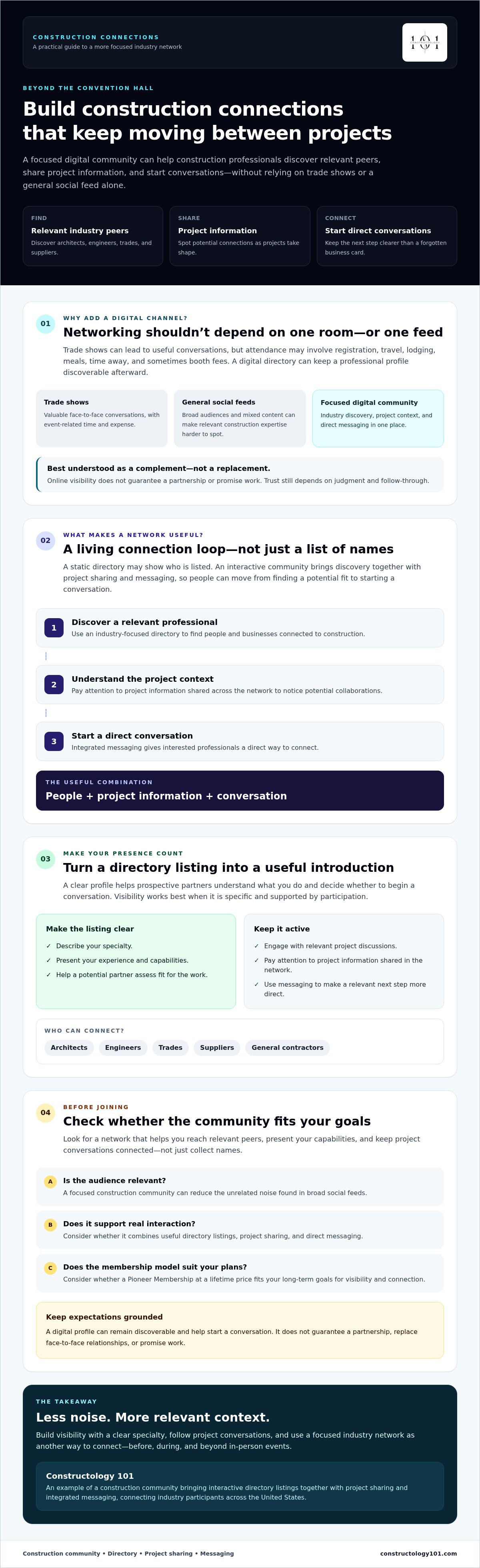
A digital network creates value when you use it with purpose. Treat your profile as a business introduction, project posts as information to investigate, and messages as the start of a professional conversation. These steps can help you build relevant connections, but they don’t guarantee contracts or replace careful partner vetting.
- Build a clear profile. Name your specialty trades, describe the work you take on, and explain what makes your team a fit. Specific, accurate details help potential partners assess relevance.
- Follow project activity. Review shared project information for signs that a team may need your expertise. Ask a focused question before proposing a partnership.
- Start a direct conversation. Use integrated messaging to contact a relevant member and introduce your capabilities. Keep the message specific, professional, and easy to respond to.
- Share project achievements thoughtfully. Post accurate examples of completed work or lessons learned, and get permission before sharing details that belong to a client or project team.
- Evaluate membership for the long term. A Pioneer Membership at a lifetime price may suit professionals who want an ongoing presence in the network. Weigh the offering against your business goals, and don’t assume membership guarantees networking returns.
Finding Reliable Construction Partners Online
Use online project information as a starting point, not proof of performance. Review what a member shares, then ask about comparable work, scope, schedule, references, and how responsibilities were handled. Confirm credentials or other requirements independently when they matter to your project. Be transparent about your own capabilities and limits, too. Clear expectations build trust before a contract is on the table.
If you’re looking for a specialty supplier or trade partner, make your request precise. Describe the scope and expertise you need, then use direct messages to follow up with relevant contacts. Don’t assume a platform includes community forums, reviews, or verified project histories unless those features are explicitly available.
Strategic Networking for Architects and Engineers
Architects and engineers can use a focused network to start conversations with potential collaborators while project requirements are taking shape. Identify the specialty consultant you need, explain the design challenge, and discuss relevant experience directly. For complex builds, clarify how partners approach coordination, BIM, or sustainability requirements rather than assuming a community provides technical collaboration tools or certifies expertise.
Constructology 101 connects construction professionals through interactive directory listings, project information sharing, and integrated messaging. Details about its construction professional network can help you assess whether a Pioneer Membership fits your long-term networking plans.
The Pioneer Advantage: Securing Your Place in the Future of Construction
Joining a new platform early is a strategic choice, not a shortcut to guaranteed contracts. Constructology 101’s Pioneer Membership is intended for construction professionals who want to establish a presence in an interactive directory and participate in a focused industry network. Its lifetime price may appeal to businesses planning to build connections over time. Review the membership terms and included access before deciding whether it fits your goals.
The “wait and see” approach can feel safe, but it also delays the work that makes a profile useful: describing your capabilities, sharing relevant project information, and building relationships. An early start gives you time to make your business visible and develop a presence as the network grows. It doesn’t guarantee greater exposure or more contracts, but it lets you participate rather than simply observe.
Why Early Adopters Can Build a Stronger Presence
Being among the early members may give you room to establish your profile and contribute while a directory is developing. Treat that as a chance to build a clear record of your work, not as a claim that you’ll win more contracts than later members. Share appropriate project examples, describe your role accurately, and follow up with relevant professionals. Consistent participation can help others understand your experience and approach.
Members can also add value by sharing useful knowledge. Offer practical insights, explain how your specialty fits into a project, and make introductions where appropriate. That kind of contribution can strengthen your reputation as a knowledgeable peer without overstating your credentials or promising outcomes.
Your Path to National Visibility
A US-focused directory gives businesses a way to present their specialty beyond their existing circle of contacts. Architects, engineers, trades, and suppliers can use an interactive listing to make their capabilities easier for relevant industry peers to explore. Project information sharing and integrated messaging provide ways to continue a connection beyond the initial profile visit.
Think of the lifetime price as a membership investment to assess against your expected use, not a guaranteed return. Ask yourself whether you’ll keep your profile current, share relevant information, and reach out to potential partners. The network can open a door, but your follow-through helps determine what comes next.
If a national construction industry community aligns with your business plans, review the membership details and decide whether early participation makes sense for your team. Secure your lifetime Pioneer Membership today and start building.
Build Your Next Connection Beyond the Handshake
Strong construction relationships still matter. The way you find and grow them is changing. Trade shows can open doors, but general social feeds and passive listings may not put your specialty in front of the right people. A focused digital network gives you another way to build visibility, share project information, and start direct conversations.
A useful construction industry community is more than a place to collect contacts. It helps architects, engineers, trades, and suppliers make relevant connections through industry-focused listings and communication. Your profile and participation matter: keep your capabilities clear, share appropriate project information, and follow up thoughtfully.
Constructology 101 brings together a specialized construction directory and integrated messaging for direct business-to-business connections. Its Pioneer Membership is offered at a lifetime price, giving early adopters a way to establish a presence in the network. Consider whether that approach fits your long-term goals for professional visibility and connection.
Claim your Pioneer Membership and join the construction community today! Take the next step toward building connections that can grow with your business.
Frequently Asked Questions
What is a construction industry community and why do I need one?
A construction industry community is a network where professionals can find one another, share project information, and build business relationships. A focused network can help you connect with peers beyond your existing contacts, including architects, engineers, specialty trades, and suppliers. Constructology 101 combines an interactive directory with project sharing and integrated messaging. It can support discovery and communication, but it doesn’t guarantee contracts, referrals, or work.
How is Constructology 101 different from LinkedIn for construction pros?
Constructology 101 is built specifically around the construction industry, while LinkedIn serves professionals across many fields. Its interactive directory is designed to showcase construction businesses and their services, while project sharing and integrated messaging support industry connections. LinkedIn may still be useful for broad professional networking. Consider using each platform for its strengths, and check that any directory’s categories and features fit your needs.
Can a digital directory really help me find specialty trades?
Yes, a specialized directory can help you discover businesses by the services they describe in their listings. For example, a project team seeking a particular trade can review relevant profiles and contact potential partners. Treat a listing as a starting point, not proof of qualifications or past performance. Confirm experience, references, credentials, availability, and project fit directly before selecting a subcontractor or supplier.
What are the benefits of a Pioneer Membership for a small business?
A Pioneer Membership gives early participants access to Constructology 101’s networking tools, project sharing, messaging, and directory features for a one-time price with lifetime membership, according to the current offering. A small business can use that presence to describe its services and connect with industry peers. The value depends on how actively you use the network, and membership doesn’t guarantee leads or contracts.
How do I use an interactive directory to get more project leads?
Use an interactive directory to improve your visibility and make it easier for relevant professionals to understand your services. Write a clear profile naming your specialty, capabilities, and project fit. Keep details current, share appropriate project information, and use integrated messaging to follow up with potential partners. These steps can support business conversations, but a directory is not lead generation software and can’t promise a specific number of inquiries or projects.
Is this community only for general contractors, or can specialty trades join?
It isn’t limited to general contractors. Constructology 101 is designed to connect a range of construction professionals, including architects, engineers, specialty trades, and suppliers. Specialty businesses can use an interactive directory listing to present their services and help industry peers discover them. Before joining, review the available directory categories and membership details to confirm they match your trade and business goals.
How does project sharing work within the community?
Project sharing lets members share project information with other construction professionals on the platform. That information can provide context for a conversation or help members identify potential areas to collaborate. Constructology 101 also includes integrated messaging for direct communication. Don’t assume project sharing includes project management, document control, or live updates. Share only information you’re authorized to disclose, and confirm project details directly with the people involved.
Why should I join a national construction directory if I work locally?
A national directory can help a locally focused business become visible to professionals beyond its existing contacts, including potential partners, suppliers, and project teams. Broader reach may be useful when a project requires a specialty or relationship you don’t currently have. Keep your profile clear about the work you take on and where you operate, and assess inquiries carefully to confirm they fit your capacity and business plans.


