

Enterprise construction software promised seamless industry collaboration. Instead, it created expensive digital silos, trapping commercial contractors behind bloated dashboards and administrative paywalls. If you want to know what the most effective B2B construction network is to connect with verified trade partners in 2026, the answer begins by choosing open communication over closed platforms.
You already know the daily frustration. Commercial trade contractors get buried under corporate noise on generic professional platforms, while traditional bid-room systems demand high recurring fees without delivering genuine relationship-building tools. As a result, locating dependable specialty trades, design professionals, and commercial material suppliers nationwide remains fragmented, sluggish, and needlessly transactional.
It doesn't have to stay that way. Discover how modern B2B construction networks help trade contractors, architects, and commercial suppliers build enduring partnerships and win lucrative project contracts. In this guide, we explore how to build a verifiable digital footprint, establish direct nationwide trade connections, and streamline your business partnerships for long-term commercial momentum.
Key Takeaways
- Discover why traditional rolodexes fail modern procurement speeds and how a dedicated B2B construction network accelerates trade collaboration nationwide.
- Learn how interactive directory listings and visual project portfolios replace static resumes to showcase verified commercial field capabilities.
- Uncover the key differences between specialized industry hubs, cluttered corporate social platforms, and costly enterprise software stacks.
- Master a step-by-step strategy to optimize your directory profile, publish verified commercial proof, and attract high-value project inquiries.
- Explore how early access to the Pioneer network helps commercial builders secure lifetime platform value and establish long-term brand authority.
What Is a B2B Construction Network and Why It Matters in 2026
A dedicated B2B construction network is a purpose-built digital ecosystem connecting trade contractors, commercial builders, architects, and specialized suppliers to form business partnerships and exchange verified capabilities. Traditional rolodexes and local phone trees can't keep up with modern procurement speed. When estimating teams manage compressed bidding windows, relying solely on legacy contact lists causes lost bids and schedule delays.
Digital transformation in commercial contracting requires verified online credibility, searchable trade credentials, and transparent capabilities. Rather than managing closed internal operational tools, modern teams apply proven vertical business-to-business models to create dynamic, peer-to-peer relationship hubs. These platforms give firms a verifiable presence that showcases field experience directly to active commercial buyers.
The Breakdown of Traditional Construction Business Development
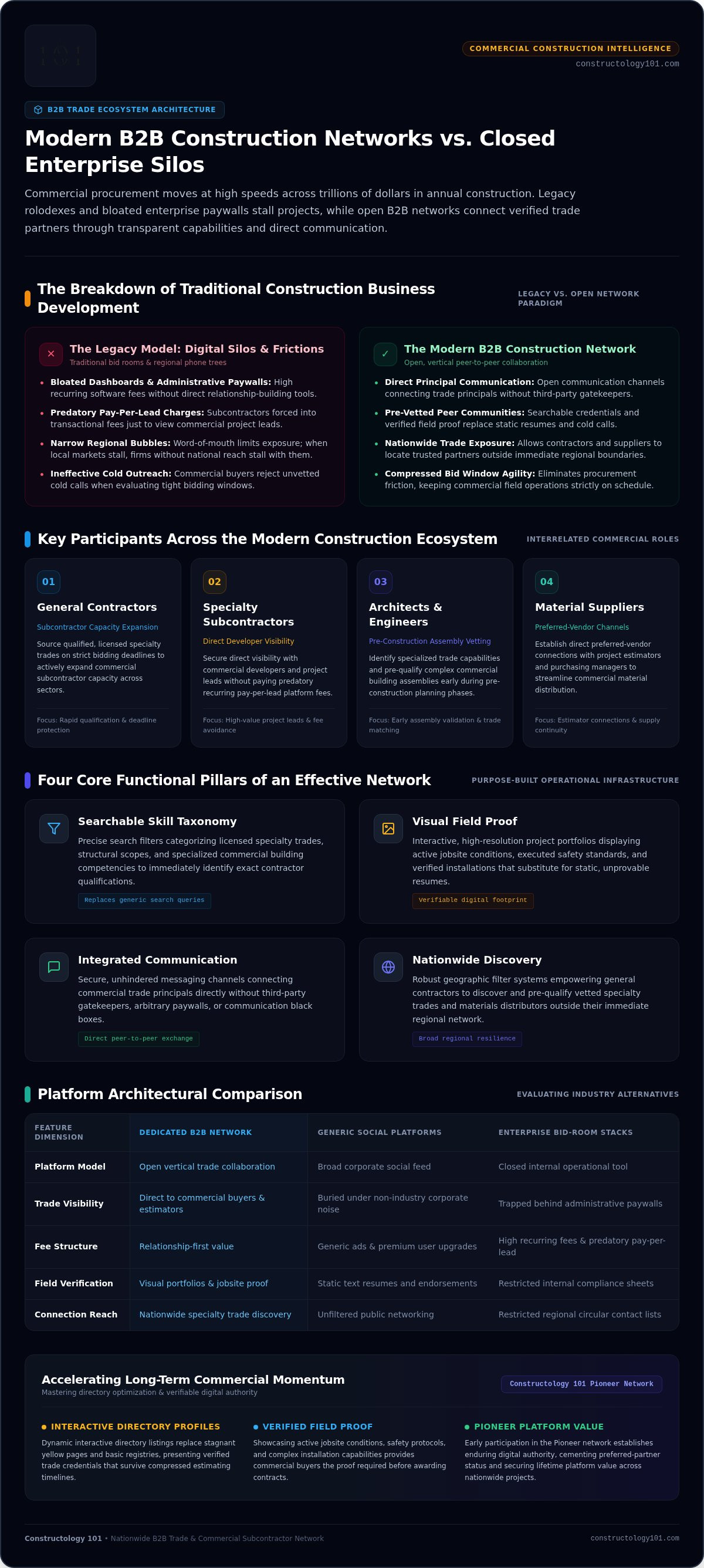
Relying exclusively on word-of-mouth limits trade contractors to narrow regional bubbles. When local commercial developments slow down, businesses without wider exposure stall. Meanwhile, frequent supply disruptions require immediate access to alternative material distributors across the country. Cold outreach to unfamiliar builders rarely succeeds because commercial buyers require verified field proof before awarding bids. A dedicated B2B construction network replaces cold calls with transparent, pre-vetted peer communities.
Key Participants Across the Modern Construction Ecosystem
Commercial project execution depends on several interrelated industry roles collaborating through shared industry hubs:
- General Contractors: Sourcing qualified, licensed specialty trades on strict bidding deadlines to expand subcontractor capacity across commercial sectors.
- Specialty Subcontractors: Securing direct visibility with commercial developers and project leads without paying predatory pay-per-lead charges.
- Architects and Engineers: Identifying specialized trade capabilities and pre-qualifying complex commercial building assemblies early during pre-construction planning.
- Building Material Suppliers: Establishing preferred-vendor connections directly with project estimators and purchasing managers to streamline material distribution.
Every commercial build requires swift coordination across these groups. Purpose-built platforms eliminate friction, align project partners early, and build lasting commercial relationships that keep field operations on schedule.
Core Features That Define an Effective Construction Industry Network
Static business cards and outdated supplier lists can't survive modern commercial procurement. As tracking from the U.S. Census Bureau on the Value of Construction Put in Place demonstrates, trillions of dollars flow across commercial, industrial, and institutional jobsites annually. Capturing a share of that market requires modern digital infrastructure. A robust B2B construction network delivers targeted operational tools designed specifically to help trade professionals find partners, present capabilities, and build direct working relationships.
Effective platforms center around four essential functional pillars:
- Searchable Skill Taxonomy: Precise filters categorizing licensed specialty trades, structural scopes, and commercial building specialties.
- Visual Field Proof: High-resolution project portfolios displaying active jobsite conditions, safety standards, and verified installations.
- Integrated Communication: Secure messaging channels connecting commercial trade principals directly without third-party gatekeepers.
- Nationwide Discovery: Filter systems allowing general contractors to quickly locate vetted specialty trades and materials distributors outside their immediate circular network.
Dynamic Interactive Directories Over Static Yellow Pages
Traditional print directories and basic online registries offer static contact details that quickly go stale. In contrast, an Interactive Directory Listing transforms your online entry into an active business asset. Trade contractors update licenses, bond capacities, and specialty service areas instantly. This trade-specific taxonomy ensures estimating teams find exact commercial capabilities within seconds, replacing guesswork with verified operational competence.
Direct Peer-to-Peer Messaging and Partnership Building
Securing major commercial subcontracts depends on direct collaboration between decision-makers. Administrative firewalls, spam-heavy corporate feeds, and automated bidding algorithms frequently stall early negotiations. Real-time messaging inside a dedicated B2B construction network lets general contractors and trade specialists discuss project requirements, material availability, and production schedules before bids lock in.
These direct conversations lay the foundation for long-term commercial alliances. Instead of bidding blindly on single projects, you cultivate reliable connections that yield repeat contracts across successive commercial builds. To begin expanding your commercial relationships today, explore how joining Constructology 101 connects your team with qualified trade peers nationwide.
B2B Construction Networks vs. Generic Platforms and Enterprise Tools
Commercial contractors often find themselves caught between two extremes: noisy social media platforms and rigid enterprise software. Neither environment effectively fosters business-to-business industry growth. A dedicated B2B construction network bridges this gap by offering a transparent space where trade specialists, general contractors, and material distributors connect without algorithmic clutter or excessive administrative overhead.
| Platform Type | Primary Focus | Audience Filter | Relationship Model |
|---|---|---|---|
| B2B Construction Network | Trade discovery and commercial partnerships | Specialized commercial builders and trades | Direct peer-to-peer collaboration |
| Generic Social Channels | General corporate career networking | Agnostic white-collar workforce | Broadcast posting and passive connections |
| Enterprise Software Suites | Internal jobsite coordination and workflows | Single project teams and paid seats | Closed data silos |
Why LinkedIn Falls Short for Specialized Trade Contractors
Generic corporate channels fail to serve commercial construction realities. White-collar algorithms prioritize corporate opinion posts while burying jobsite craftsmanship and field execution. Estimators cannot easily filter profiles by MasterFormat division codes, bonding thresholds, or commercial crew sizes. Instead, contractors face constant cold pitches from software recruiters and service agencies. The lack of industry-specific structure wastes valuable pre-construction time and drives skilled trades away from productive engagement.
Software Utility vs. Community: The Enterprise Tool Fallacy
Enterprise construction suites serve an operational purpose, but they don't replace business development. Managing submittals, drawing revisions, and daily logs helps organize existing projects; it does not build external supplier benches or discover reliable specialty subcontractors. Many contractors resent escalating per-user fees just to maintain contact records for partners who rarely log in. Reviewing the industry analysis in Top ConstructConnect Alternatives shows why firms are turning toward open commercial directories instead of closed, bloated systems.
A true commercial community prioritizes discoverability over operational tracking. Separating internal project coordination from external trade networking lets commercial builders preserve capital while expanding their commercial market reach.
How Commercial Contractors and Suppliers Maximize ROI on Modern Networks
Creating a digital profile is just the beginning. To secure steady project bids and generate measurable returns inside a dedicated B2B construction network, commercial trade contractors and material vendors must approach their digital presence systematically. Treating your presence as an active digital storefront turns incoming inquiries into reliable revenue.
Maximizing returns across a digital trade community requires four deliberate steps:
- Build a Complete, Search-Optimized Listing: Document exact operational scopes, licensing classifications, bonding limits, and safety metrics to surface in contractor searches.
- Publish Visual Field Documentation: Add high-resolution project photography showing completed installations, mechanical assemblies, and clean jobsite safety management.
- Initiate Proactive Peer Outreach: Introduce your business directly to upstream architects, structural engineers, and commercial distributors before major bids release.
- Engage in Direct Partnership Discussions: Use integrated messaging tools to evaluate joint venture capabilities, confirm material lead times, and negotiate subcontract terms without middlemen.
Consistent digital positioning compounds your commercial reputation, turning single project bids into multi-year commercial alliances.
Optimizing Your Profile for Commercial Subcontracting Searches
Estimators and project executives search using specific trade criteria, not broad generic phrases. When detailing your specialties, list exact scope capabilities, crew size capacities, and regulatory endorsements. Highlight your safety history and insurance standing upfront to clear risk-assessment hurdles quickly. Updating your visual portfolio after each major milestone provides proof of capability, helping general contractors verify craftsmanship before inviting your team to estimate.
Sourcing Reliable Suppliers and Specialist Trades Nationwide
Project success hinges on building an agile supplier bench. Relying on a single vendor invites supply chain bottlenecks that derail milestones. Modern directories make it simple to review distributor capabilities and compare logistical reach across regions. To refine your procurement workflows, review the strategies outlined in How to Find Construction Suppliers in the US.
Establishing secondary and tertiary vendor contacts shields your commercial projects from regional material shortages. If you want to position your contracting business in front of active commercial developers and build these vital supply relationships, claim your interactive directory listing today.
Accelerating Growth With Constructology 101 and the Pioneer Network
Most commercial contracting directories restrict essential tools behind aggressive sales pipelines and recurring subscription models. Constructology 101 takes an entirely different approach. Built as a specialized B2B construction network, the platform serves as an interactive online directory and professional social home for trade contractors, commercial builders, architects, and suppliers. The goal is simple: replace software gatekeeping with direct peer communication and verified commercial discovery.
Instead of locking basic messaging features behind high recurring tiers, Constructology 101 equips commercial businesses with targeted networking assets:
- Interactive Directory Listings: Searchable profiles designed specifically around commercial trade classifications, licensing, and verified capabilities.
- Integrated Messaging System: Direct communication tools enabling contractor-to-contractor collaboration without intermediaries or hidden message credits.
- Nationwide Trade Reach: Open discovery across specialty contractors, general builders, design professionals, and material suppliers across the country.
The Advantage of Early Pioneer Platform Membership
Early platform adopters gain unmatched strategic leverage. The Pioneer membership offers founding builders and specialty trades lifetime access to the platform without recurring subscription overhead. By securing this status during the network's growth phase, members establish prominent brand visibility before category competition intensifies. To learn how lifetime network access delivers sustained business development value, read the analysis in Construction Industry Lifetime Membership.
Taking Action: Expanding Your National Construction Footprint
Commercial project growth requires taking decisive action rather than waiting for word-of-mouth leads to materialize. Activating your presence on a modern B2B construction network establishes an immediate, authoritative digital footprint. Complete your interactive directory listing, upload high-resolution field documentation, and detail your core trade competencies to capture the attention of active project estimators.
Once your profile goes live, start engaging directly with project leads. Reach out to general contractors bidding on commercial projects, connect with architects planning upcoming developments, and source reliable building suppliers across the country. By utilizing transparent on-platform messaging to build verified professional alliances, your business creates durable commercial relationships that keep your project pipeline full year after year.
Build Lasting Trade Partnerships for the Future
Commercial construction moves fast, and relying on outdated phone trees or noisy corporate feeds leaves profitable contracts on the table. Sustainable growth requires a verifiable digital presence, searchable trade credentials, and direct access to decision-makers. A dedicated B2B construction network eliminates administrative software bloat, giving specialty trades, builders, and suppliers a shared space to forge real working relationships.
Constructology 101 offers the specialized infrastructure your business needs to expand nationwide. Showcase your field capabilities with an interactive directory listing tailored specifically to commercial trades. Connect with licensed peers, discuss upcoming scopes through integrated peer-to-peer messaging, and bypass expensive software paywalls entirely.
Take control of your commercial pipeline today. Join the Pioneer Member Program and claim your lifetime listing to secure early-adopter visibility and position your brand at the center of modern construction collaboration.
Frequently Asked Questions
What makes a dedicated B2B construction network different from LinkedIn?
A dedicated B2B construction network focuses entirely on commercial trade scopes, building divisions, and project capabilities rather than general corporate careers. While generic feeds prioritize white-collar thought leadership and software recruiting, a trade network filters profiles by trade classifications, licensing, and past installations. Estimators and builders can locate vetted subcontractors and suppliers directly without sifting through unrelated corporate posts.
Can general contractors use a B2B construction network to find specialty subcontractors?
Yes, general contractors use the platform to search for qualified specialty trades across the country. Instead of cold-calling unknown outfits during compressed bidding periods, contractors can filter listings by trade classification, bonding capacity, and verified project history. Direct messaging allows them to confirm availability and discuss project specifications immediately, streamlining subcontractor procurement without intermediary delays.
How does an interactive directory listing improve my construction business visibility?
An interactive directory listing transforms a static company entry into an active business asset. Trade contractors and suppliers can display trade qualifications, field photography, safety records, and licensing information directly to commercial decision-makers. Because the directory is categorized by industry-specific trade taxonomy, commercial builders searching for niche competencies can locate your business quickly and initiate project discussions.
Is a B2B construction network suitable for building material suppliers and manufacturers?
Commercial suppliers benefit significantly from participating in a dedicated trade network. Material distributors can present product lines, confirm delivery logistics, and build direct relationships with project estimators and purchasing managers. Connecting directly with general contractors and specialty installers allows manufacturers to get specified on commercial projects early, bypassing third-party sales middlemen.
What is the Pioneer Membership on Constructology 101?
The Pioneer Membership is an early-adopter tier offering lifetime platform access for founding construction professionals. Early participants secure lifetime directory listing benefits, direct peer messaging capabilities, and full access to project networking tools without ongoing subscription overhead. This program helps forward-thinking trade contractors and commercial suppliers establish national visibility and industry authority on the ground floor as the community grows.
Do I need technical skills or complex software installations to join the network?
No specialized technical skills or heavy software installations are required. Constructology 101 operates as an intuitive web-based network accessible through standard web browsers on desktop or mobile devices. Setting up your profile involves entering your business details, choosing trade classifications, and uploading project photos. You can begin messaging trade partners and expanding your network immediately without lengthy onboarding.
How do trade professionals verify credentials and previous work on the platform?
Members showcase credibility by documenting active licensing statuses, safety standards, and insurance information directly within their directory profiles. Businesses also upload visual project portfolios featuring jobsite photography from completed commercial builds. This real-world field proof allows prospective partners to review craftsmanship and project scale before initiating contact through the integrated messaging system.


