

One missed deadline doesn’t make a subcontractor a bad fit. A pattern of missed commitments might. The signs of a bad subcontractor are easier to spot when you look beyond one difficult day and track recurring problems against the project’s agreed expectations.
Late arrivals can disrupt sequencing, vague updates can leave you guessing about schedule or cost, and quality or safety concerns can increase the risk of rework. But projects have friction. A delay or disagreement may have a reasonable explanation, so separate an isolated setback from a recurring pattern before deciding how to respond.
This article explains how to recognize warning signs through observable evidence, raise concerns clearly, and document agreed next steps. You’ll also learn how to assess the subcontractor’s response and decide whether to continue, correct course, or end the working relationship. The goal isn’t to overreact to one setback. It’s to protect your schedule, crew, and project before small issues become bigger risks.
Key Takeaways
- Look for observable, recurring behavior that affects agreed expectations, and consider whether unclear scope or changing site conditions contributed.
- Use the signs of a bad subcontractor as evidence to assess, not as a verdict based on one setback. Pay attention to how the subcontractor responds.
- Address concerns with specific examples tied to scope, dates, quality expectations, or observed conduct.
- Agree on corrective actions and a review point, then reassess based on documented improvement and remaining project risk.
- For future projects, clarify deliverables, interfaces, milestones, and communication routines before work begins.
Signs of a Bad Subcontractor: Which Patterns Should Raise Concern?
Spotting trouble early gives you time to limit schedule disruption, clarify expectations, and address risks before they affect other work. A red flag is an observable, recurring behavior that affects agreed project expectations, such as scope, timing, quality, communication, or safe conduct. It isn’t a reason to rush to blame someone.
Start with signals you can describe and document:
- Repeated no-shows or missed commitments without timely notice.
- Unexplained silence when project-critical decisions or updates are needed.
- Recurring rework or incomplete work that doesn’t meet agreed requirements.
- Safety concerns that remain unresolved after they’ve been raised.
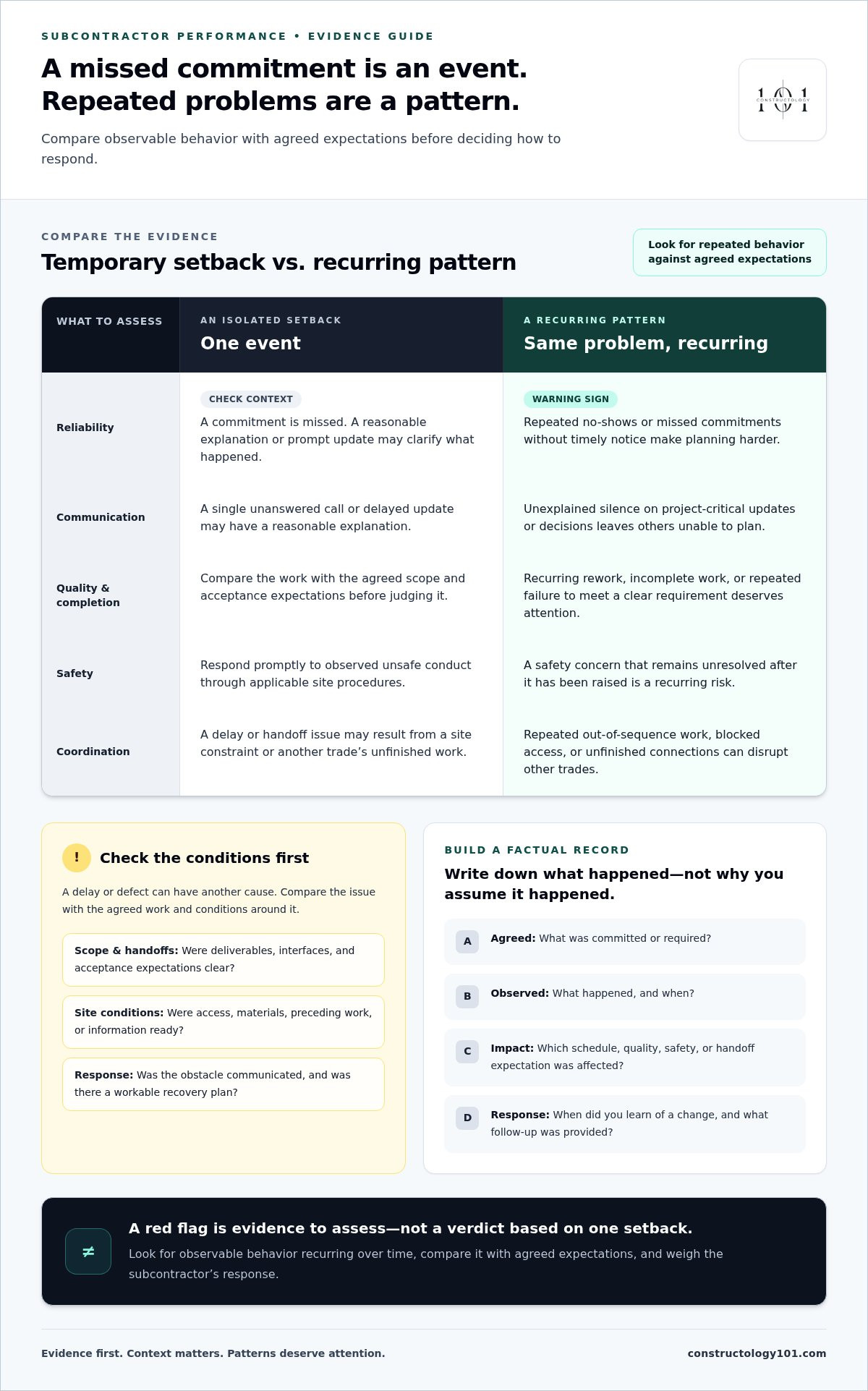
A single setback is an event; a documented pattern is the same performance problem recurring over time. Keep the distinction in view. It helps you respond to evidence rather than frustration, while still taking repeated disruption seriously.
Communication and reliability problems you can observe
Watch what happens after a commitment is made. A subcontractor may miss a coordination meeting, send a schedule update after other trades have adjusted their work, or leave a time-sensitive question unanswered. One missed call may be an emergency. Repeated gaps, especially without notice or a clear follow-up, make it harder to plan labor, access, deliveries, and handoffs.
Measure reliability by actions, not confident promises. If a subcontractor says a crew will arrive Tuesday, note whether it arrives or whether you receive an update early enough to adjust. Don’t assume why a commitment was missed. Record what was agreed, what happened, when you learned of the change, and how the subcontractor responded. A prompt explanation and workable recovery plan are different evidence from silence followed by another missed commitment.
Quality, safety, and coordination warning signs
Look for defects that recur after correction, unfinished work at an interface, or repeated departures from specified requirements. Before treating an issue as a performance concern, compare the work with the agreed scope and acceptance expectations. This can show whether the standard was clear. A repeated failure to meet a clear requirement deserves focused attention.
Address unsafe conduct promptly through applicable site procedures. Be specific about the observed behavior and immediate concern. Don’t treat safety as a routine quality punch-list item. Follow the site’s established reporting and response process, and document the issue and actions taken.
Coordination problems can be just as visible. Work may block access, arrive out of sequence, or leave another trade waiting on an unfinished connection. Construction involves linked stages and teams, as outlined in the Construction Management Overview. Track the dependency affected and the resulting handoff issue. That creates a clearer picture of whether the problem is an isolated site constraint or a repeated obstacle to the agreed plan.
Why Subcontractor Problems Repeat: Look at the Work, Scope, and Communication
A delay or defect can look like a performance problem while having another cause. The work may depend on an unfinished handoff, restricted site access, or information that changed after the crew was ready. Before deciding that recurring issues are signs of a bad subcontractor, compare what happened with the agreed work and the conditions surrounding it.
Clear scope and timely information give each trade a shared target and a fair chance to meet it. Scope clarity means everyone understands the deliverables, interfaces with other trades, exclusions, and acceptance expectations. When any part is vague, teams may make different assumptions about who does what, when work is ready, or what counts as complete.
Check whether the scope and handoffs were clear
Start with the written scope, drawings, specifications, and approved changes. Compare them with the work in place. For example, if an installation is incomplete, identify whether the subcontractor’s task includes the final connection or whether that depends on another trade. Check for revised information, unanswered decisions, or access limits that may have affected the work.
Map the handoffs. One trade may need a surface prepared, an area cleared, or a preceding installation completed before it can proceed. Note which party controls each step and when it was ready. This keeps the conversation focused on facts rather than assumptions about responsibility. If the documents conflict or leave an interface unclear, flag the gap and seek a shared interpretation before treating the issue as a failure to perform.
Understand schedule pressure without excusing repeated failures
Review the agreed milestones and sequence of dependent work before judging the impact of a delay. A missed date may affect the critical path, or it may be absorbed by available float. Its effect depends on the project sequence. Late materials, unavailable access, or incomplete preceding work can shift when a subcontractor is able to begin.
Those constraints don’t erase the need for timely notice and a workable recovery plan. Focus on whether the subcontractor communicated the obstacle, identified what was needed, and followed through once the constraint changed. Apply the same standard to project-side delays. A balanced record helps distinguish a genuine constraint from repeated failures to act on commitments.
For federal contracts, the Federal Acquisition Regulation (FAR) Definitions provide context for how claims are defined. The rules and contract terms that apply depend on the project. Keep scope records, change decisions, and schedule communications organized so concerns can be addressed through the appropriate contractual process.
Clearer professional connections can support future project planning. Constructology 101’s interactive directory for construction professionals helps industry professionals showcase services and connect. Project-specific scope and due diligence remain essential.
Bad Subcontractor or Temporary Setback? Compare Evidence Before Deciding
A missed date, a correction, or a disagreement can disrupt work without proving a subcontractor is consistently underperforming. Judge the issue in context: what was agreed, what happened, what impact followed, and how the subcontractor responded. The signs of a bad subcontractor become more persuasive when evidence shows the same avoidable problem continuing after expectations are clear and the subcontractor has had a chance to correct course.
Use this comparison to identify what you know and what still needs clarification:
| Isolated issue | Repeated pattern | Observable evidence | Reasonable next question |
|---|---|---|---|
| One missed meeting | Meetings or updates are repeatedly missed | Calendar invite, attendance, and notice received | What update routine will prevent another gap? |
| A delay tied to a documented access issue | Commitments keep slipping without timely notice or recovery steps | Agreed milestone, access record, revised dates | What is the current constraint and recovery plan? |
| A correction to work that misses a stated requirement | The same requirement is missed after correction | Specification, inspection notes, correction record | What will change to meet the requirement next time? |
| A single coordination conflict | Handoffs repeatedly obstruct other trades | Sequence, work status, affected interface | What needs to be ready before the next handoff? |
Responsiveness matters as much as the initial problem. A subcontractor who acknowledges an issue, communicates a realistic correction, and follows through provides different evidence from one who avoids the discussion or repeats the same failure. For quality concerns, compare the work with agreed requirements and documented corrections, not personal preference. One disagreement over appearance or approach isn’t conclusive if the work meets the stated standard.
Build a fair record from project facts
Track dates, commitments, messages, work status, and the specific deliverable affected. Write “the crew arrived after the agreed start time” rather than “the crew doesn’t care.” The first describes an observable event; the second assumes motive. Add the subcontractor’s response and any agreed corrective action. Reviewing the sequence later can show whether the issue stopped, shifted, or continued.
Use project impact to judge the seriousness
Assess whether the issue affects a dependent activity, requires rework, prevents quality acceptance, or creates a safety concern. An inconvenience may be manageable; blocked follow-on work or repeated correction can put project outcomes at risk. Consider the actual effect, not just the frustration it caused. If there’s an immediate safety concern, act promptly under applicable site procedures rather than waiting to see whether a pattern develops.
Keep one mistake in proportion, but don’t dismiss evidence simply because each event has a different explanation. Compare incidents over time and check whether agreed actions lead to change. That gives you a sounder basis for the next conversation and avoids turning either a temporary setback or a persistent concern into a premature conclusion.
How to Address Subcontractor Red Flags: A Practical Response Sequence
Noticing the signs of a bad subcontractor is only the starting point. Your next move should be clear, proportionate, and grounded in project facts. Use this sequence to address concerns, give the subcontractor a defined opportunity to respond, and decide whether the situation is improving.
- Verify the facts. Check the relevant scope, dates, messages, work status, and applicable quality or site expectations. Separate what you observed from assumptions about why it happened. Confirm the concern isn’t based on an outdated drawing, changed instruction, or missed handoff.
- Raise the issue directly. Describe the specific observation, its project impact, and the agreed expectation. For example: “The area scheduled for handoff was incomplete on the agreed date, which affects the next activity. What prevented completion?” Give the subcontractor a chance to explain before deciding what caused the problem.
- Agree on an action. Define what needs to change, who will do it, and what completion looks like. Keep the action practical and connected to the issue, such as completing a specified correction or providing an update before a milestone.
- Set a review point. Choose a follow-up date or project milestone that gives you a fair chance to see whether the agreed action happened. Make the timing specific enough to support coordination, not just “soon.”
- Reassess. Compare the result with the commitment. Did the work meet the stated requirement? Was the update provided? If the issue remains, note what is unresolved and use the project’s established process for deciding next steps.
Raise the issue clearly and agree on corrective action
Keep the conversation calm and focused. Refer to the scope, schedule date, quality expectation, or observed conduct rather than using labels or accusations. Ask for the subcontractor’s account, then confirm the agreed action in writing. Capture the responsible person, deliverable, and follow-up date so everyone has the same record. A concise recap can prevent the discussion from becoming a second source of confusion.
Know when to escalate beyond an informal conversation
If an issue recurs or remains unresolved, use the project’s established communication channels. Contract terms govern formal notices and remedies, while applicable site procedures guide safety concerns. Follow those processes rather than relying on assumptions about legal rights or obligations. Keep records factual, organized, and limited to appropriate project stakeholders. For an immediate safety concern, follow site procedures promptly instead of waiting for a routine review.
Strong project relationships also start with clear connections. Explore the construction professional directory to discover and connect with industry professionals. Use those connections as a starting point, then assess each potential project relationship against its specific scope and requirements.
Choose Better Next Steps After Subcontractor Warning Signs
Once you’ve raised a concern, base your decision on what happens next. Compare the subcontractor’s recent work with agreed corrective actions, remaining project requirements, and the risk created by unresolved issues. The signs of a bad subcontractor matter most when documented problems continue despite clear expectations and a reasonable opportunity to address them.
Decide whether correction, transition, or termination is appropriate
There’s no single response for every project. If corrective actions are completed and performance improves, continuing may make sense. If problems remain, weigh the quality and safety of the work, schedule exposure, continuity needs, and the amount of work still outstanding. A transition can also introduce new handoffs and coordination demands, so consider the practical impact before changing course.
Keep the decision tied to evidence and the project’s governing documents. Review applicable contract procedures before taking formal steps, and seek qualified advice if you’re uncertain about your rights or obligations. Avoid relying on assumptions or informal promises when a contract process applies. The aim is a measured decision that protects the project while treating the working relationship fairly.
Strengthen your next subcontractor relationship
Use what you learned to make future engagements clearer from the start. Set out the deliverables, exclusions, acceptance expectations, and interfaces with other trades. Connect milestones to the information, access, and preceding work needed to meet them. Agree on how schedule changes, quality concerns, and urgent project questions will be communicated, and identify who owns each handoff.
Build routines that make expectations visible. For example, establish when progress updates are due, how changes are documented, and where decisions are recorded. Clear routines help both sides spot emerging issues sooner and respond with less confusion. A reliable construction partner checklist can help you organize considerations for future working relationships.
Professional discovery can broaden your network of potential project partners. A directory can help you find professionals whose services align with a project’s scope and connect with them. It doesn’t verify a subcontractor’s performance or replace project-specific due diligence.
Use clear expectations, direct communication, and documented follow-through to give the next working relationship a stronger start. To explore professional connections across the construction industry, visit the interactive construction professional directory.
Build Stronger Construction Partnerships From Here
The signs of a bad subcontractor can prompt more than a decision about one project. Use what you’ve learned to set clearer expectations, build stronger communication routines, and make more deliberate professional connections on the next one.
Constructology 101 brings construction professionals and specialty trades together through an interactive directory. Professionals can showcase their services and connect through integrated messaging and project-sharing tools. Use those connections to start conversations about potential project partnerships, then apply project-specific due diligence before making commitments.
Explore the Constructology 101 construction professional directory to expand your industry connections and find new opportunities to build working relationships. Your next project can start with a clearer plan and a stronger network.
Frequently Asked Questions
What are the most common signs of a bad subcontractor?
Common signs include commitments that repeatedly go unmet, project-critical information arriving too late, work that doesn’t meet stated requirements, and unresolved safety concerns. Look for effects you can tie to the project, such as a delayed handoff or an open correction. A useful test is whether the concern continues after expectations have been made clear and the subcontractor has had a chance to respond.
How can I tell if a subcontractor is unreliable or just delayed?
Check what caused the delay and how the subcontractor handled it. A delivery held up by a documented site constraint, followed by a revised plan and updates, differs from repeated delays without notice or follow-through. Compare the agreed milestone with actual progress, then check whether other work was ready for the subcontractor to proceed. The explanation matters, but so does whether the response helps the project recover.
What should I do if a subcontractor stops responding?
Send a concise written message through the project’s agreed communication channel. Identify the unanswered decision or deliverable, explain what depends on it, and request a response by a practical time tied to the schedule. Keep a copy and note any effects on other work. If the silence continues, follow the contract’s communication and notice procedures, and use applicable site procedures immediately if safety is involved.
Can I terminate a subcontractor for poor performance?
Possibly, but whether termination is appropriate depends on the subcontract and the circumstances. Review provisions on performance, notice, opportunities to correct, and termination before taking formal action. Consider remaining work, continuity, safety, quality, and schedule impacts as well. If the contract language or your rights are uncertain, get advice from a qualified construction attorney before acting. A poor-performance label alone doesn’t automatically justify termination.
How should I document subcontractor performance problems?
Create a dated project log that connects each concern to a specific commitment or deliverable. Record the relevant document or drawing version, observed work status, messages exchanged, photographs where appropriate, and any agreed follow-up. Keep original records in their existing format and avoid editing images or messages in ways that could obscure context. Separate facts from opinions, and share the record only with people who need it for the project.
Is one missed deadline enough to call a subcontractor bad?
No. One missed deadline is a reason to understand what happened, not enough by itself to judge overall performance. Check whether the date was affected by access, preceding work, a changed instruction, or another documented constraint. Then consider whether the subcontractor gave notice and helped establish a workable next step. A serious safety issue may require immediate action, but a single schedule miss needs context.
How can I find a subcontractor for a future project?
Use construction-industry networks and directories to discover professionals whose services align with the project scope. Constructology 101’s interactive directory helps construction professionals and specialty trades showcase services and connect. Its networking, messaging, and project-sharing tools support professional connections. A directory is a discovery resource, not a performance guarantee. Before engagement, assess project-specific experience, scope fit, documentation, and the requirements of the work.


