

What if a B2B construction marketplace could help you find expertise and build industry relationships, not just source materials? Construction professionals need practical ways to connect with relevant businesses, but the term “marketplace” can describe very different tools.
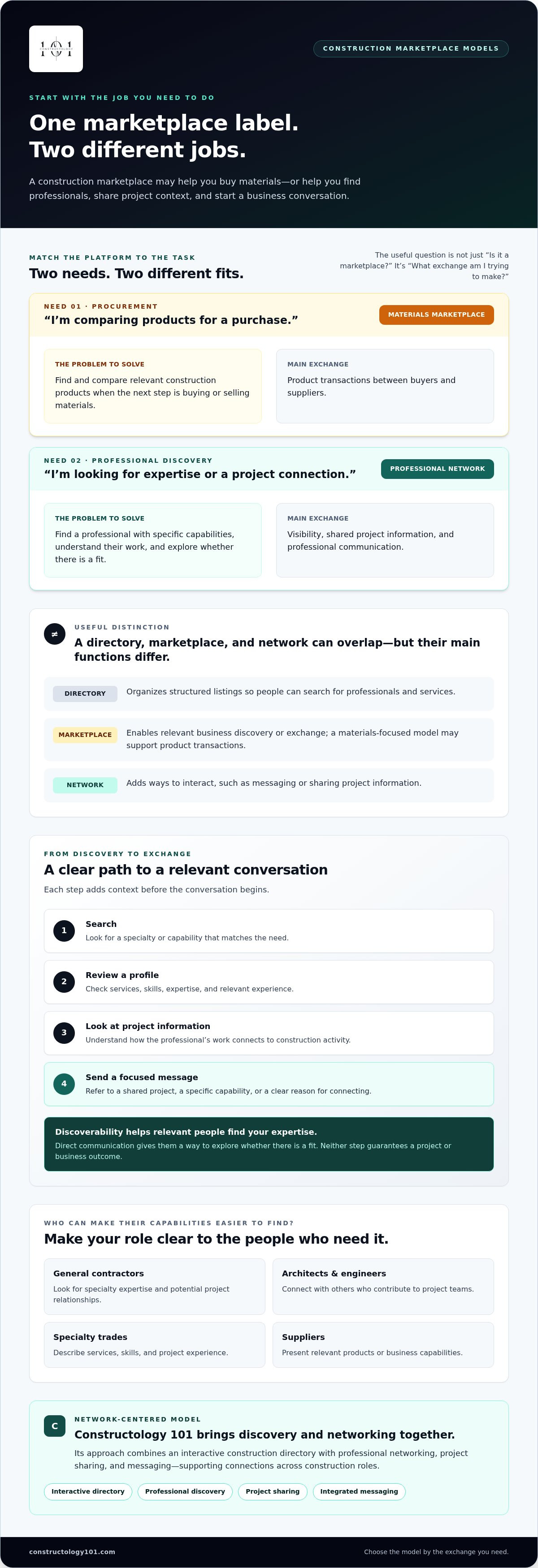
That distinction matters. A materials marketplace supports buying and selling, while a professional network focuses on visibility, shared project information, and communication. Choose the model based on the job at hand: are you comparing products for a purchase, or trying to find a professional with specific capabilities?
This guide explains the main construction marketplace models and how to choose an approach that supports your business. You’ll also learn how an interactive directory, project sharing, and integrated messaging can help people discover your expertise and start relevant conversations. Constructology 101 is built around professional discovery and networking, connecting construction businesses and professionals across industry roles. A platform can make potential connections easier to find; useful, genuine interaction helps develop them.
Key Takeaways
- A B2B construction marketplace can support procurement, professional discovery, or both. Match the platform model to the task you need to move forward.
- Set a clear goal before joining so you can focus your profile and activity on the connections that matter to your business.
- Make your skills, services, and project experience specific enough for construction professionals to understand where you fit.
- Use a clear path from discovery to conversation: find a relevant profile, identify a useful point of connection, and send a focused message.
- Constructology 101 brings directory listings and networking tools together to support professional connections across construction roles.
What Is a B2B Construction Marketplace, and What Can It Help You Do?
Finding the right business connection once meant relying on referrals, industry events, phone calls, and personal networks. A digital marketplace adds an online place to search for businesses, review their capabilities, and begin a relevant exchange. That exchange might involve purchasing materials, finding a professional with specific expertise, or discussing a potential project connection.
A B2B construction marketplace is a digital environment where construction businesses and professionals discover one another and exchange products, services, project information, or business communication. Some platforms focus on transactions between buyers and sellers, while others support professional discovery and networking. As a broad reference, B2B online marketplaces connect businesses in a digital setting, but the type of exchange depends on the platform. A professional network marketplace does not necessarily sell construction materials.
Which construction businesses participate in B2B marketplaces?
Different construction roles can use a marketplace to make their capabilities easier to find. General contractors may look for specialty expertise and potential project relationships. Architects and engineers can connect with others who contribute to project teams. Specialty trades can describe their services and experience, while suppliers can present relevant products or business capabilities. For each participant, the useful question is what another professional needs to know to recognize a potential fit.
Marketplace, directory, or professional network: what is the difference?
A marketplace is a digital environment that enables relevant business discovery or exchange. A materials-focused marketplace may help buyers and suppliers conduct product transactions. A directory organizes structured listings so people can search for professionals and services. A professional network adds ways to interact, such as messaging or sharing project information. These models can overlap, but their main functions differ.
Think of the experience as a path. A directory listing helps someone find a business and understand its services. A marketplace can support the next step, whether that is a purchase inquiry or a business connection. Project sharing gives professionals context about their work, while integrated messaging lets them communicate directly. Together, these features can move discovery beyond a name in a search result and toward a useful professional exchange.
For example, a contractor searching for a specialty trade may need to understand the trade’s capabilities before starting a conversation. An architect may be looking for professionals whose expertise complements a project team’s needs. In both cases, a network-centered B2B construction marketplace supports discovery and communication rather than materials purchasing alone. Constructology 101 follows this model, combining an interactive construction directory with professional networking, project sharing, and messaging.
How Does a B2B Construction Marketplace Create Useful Industry Connections?
A useful connection usually starts with a clear reason to connect. On a professional marketplace, the process can be simple: search for a specialty or capability, review a profile, look at shared project information, then send a focused message. Each step provides context before the conversation begins.
Discoverability helps relevant people find your expertise; direct communication gives them a way to explore whether there is a fit. Neither step guarantees a project or business outcome. Together, they make it easier to move from finding a name to starting a relevant professional exchange.
How do listings help construction professionals get discovered?
A profile is most useful when it explains what you do in terms industry peers recognize. A specialty trade can describe its services and skills. An architect or engineer can identify areas of expertise. A supplier can outline relevant products or capabilities. Specific, accurate descriptions help visitors understand your role and why they might connect.
Skip broad claims that could describe almost any business. Name the work you perform, the expertise you bring, and the project contexts that reflect your experience. Keep details current and easy to scan. A well-organized listing does not promise search placement or a steady flow of inquiries, but it can help a relevant visitor make a more informed decision about reaching out. For practical ideas on presenting your business, see this interactive directory listing guide.
How do project sharing and messaging extend discovery?
A service description tells people what you offer. Project information adds context by showing how your work connects to construction activity. Share details that help peers understand your role, approach, or expertise, giving them a natural starting point for a conversation. Focus on your contribution and relevant work context rather than making every post a generic promotion.
Integrated messaging gives professionals a direct way to continue the exchange within the network. A concise first message can refer to a shared project, a specific capability, or a clear reason for connecting. That context helps keep the conversation useful and respectful of everyone’s time.
For suppliers, connection-building sits alongside the broader work of coordinating products, information, and business relationships across the supply chain. ASCM’s overview of Supply Chain Management (SCM) offers wider context for that coordination. A professional network supports a different but related need: making people and capabilities easier to discover and discuss.
Constructology 101 brings interactive directory listings, project sharing, and integrated messaging into one professional network. Explore the Constructology 101 professional network to see how these tools support discovery and conversation across construction roles.
Materials Marketplace vs. Professional Network: Which Model Fits Your Goal?
Choose a platform based on the task, not just the word “marketplace.” A materials marketplace helps buyers evaluate products and purchasing options. A professional network helps people present expertise, discover peers, and start business conversations. Some platforms combine functions, but a directory listing or message feature does not automatically mean the platform supports product selection, checkout, or order fulfillment.
| Comparison | Materials marketplace | Professional network |
|---|---|---|
| Primary job | Support construction product purchasing. | Support professional discovery and connection. |
| Typical users | Buyers, contractors, and material suppliers. | Contractors, architects, engineers, specialty trades, and suppliers. |
| Core activity | Compare products or vendors, request quotes, and evaluate purchasing options. | Review profiles, explore expertise, share project context, and communicate. |
| Useful outcome | A clearer path to evaluating materials for a project. | A more relevant starting point for a professional relationship. |
When does a materials marketplace make sense?
Use this model when your immediate need is procurement. A buyer may compare product details and vendors, then consider which purchasing option suits the project. A request for quotation, or RFQ, can help communicate specific material requirements to potential suppliers. This process centers on products and purchasing needs. Assess it separately from networking goals such as showcasing expertise or finding professionals to connect with.
When does a construction professional network make sense?
Choose a network when your goal is to present capabilities, find peers, or share project context. Architects and engineers can look across roles for relevant expertise; specialty trades can make their skills visible; suppliers can build connections beyond a product inquiry. For a broader view of how these platforms support industry relationships, explore this construction professional network guide.
A hybrid platform may offer both professional listings and tools for interaction, such as project sharing or messaging. Those features support discovery and conversation; they do not necessarily provide product catalogs, purchasing workflows, or checkout. Compare the platform’s main purpose with the task you need to complete. A national construction directory selection guide can help clarify what to look for when professional visibility is the priority.
There is no universal winner. If your next step is sourcing materials, focus on procurement features. If you want to find complementary expertise or build industry relationships, prioritize a professional network. A B2B construction marketplace should fit the outcome you are pursuing, not force every business need into one model.
How to Get Practical Value from a B2B Construction Marketplace
Joining a B2B construction marketplace is a starting point, not a business outcome. Get more from it by taking deliberate steps: decide whom you want to connect with, make your capabilities clear, share useful work context, and follow up thoughtfully. The aim is to help relevant peers understand what you do and give them a reason to start a professional conversation.
- Define your goal. A contractor might seek specialty expertise for upcoming work. An architect or engineer may want to connect with complementary disciplines. A trade professional could showcase a capability, while a supplier may aim to build relationships with construction businesses.
- Complete your profile. Describe your services, specialties, skills, and the work you are interested in. Use direct language peers can quickly understand.
- Share relevant work. Add project information that gives others context about your experience and role. Keep each post connected to the kind of professional relationship you want to build.
- Follow up with purpose. Reference a specific capability or project when messaging someone. A relevant, professional note is more useful than a generic pitch.
What should a construction professional include in a marketplace profile?
Make your profile specific enough to help a peer recognize a potential fit. Contractors can explain the expertise they need or the project relationships they want to develop. Architects and engineers can describe their disciplines and the skills they bring to project teams. Specialty trades can name their services and core capabilities; suppliers can outline what they provide and who they support.
Specific profile information makes it easier for relevant professionals to recognize your expertise and understand why they might connect. Add project context that clarifies your contribution, such as the type of work involved or your role, without relying on broad claims. Keep details accurate as your capabilities and priorities change. For a more detailed profile checklist, use this guide to optimizing a construction professional profile.
How can members turn discovery into ongoing relationships?
Share project information that gives peers a clear, useful starting point. A trade professional might describe a specialty relevant to a project; an engineer could share context about the expertise they bring to a team. Focus on what helps another professional understand the work, not on making every post a sales message.
When someone’s profile or project details align with your goal, follow up through the platform’s messaging tools. Mention what prompted your message, explain the connection you see, and invite a focused conversation. Respond professionally and keep the exchange relevant, even if there is no immediate project to discuss. Consistent participation builds familiarity over time. It does not guarantee leads or contracts, but it gives relationships room to develop.
Use Constructology 101’s interactive directory, project sharing, and integrated messaging to put these steps into practice. Build your construction professional presence and make each interaction a useful next step.
How Constructology 101 Combines a Construction Directory with Networking
Constructology 101 brings professional discovery and ongoing interaction together in one construction-focused network. Its interactive directory gives businesses and professionals a place to showcase skills and services. Project sharing adds context about their work, while integrated messaging gives members a way to communicate with peers. The result is a path from being discoverable to beginning a conversation, with professional networking rather than materials purchasing at its center.
What can professionals do through Constructology 101?
Start with a listing that clearly reflects your role and capabilities. Contractors, architects, engineers, specialty trades, and suppliers can use the directory to present the services and skills they want industry peers to understand. A focused description helps someone searching across construction roles see where your expertise may be relevant.
Project sharing adds another layer. Rather than relying on a brief profile description alone, professionals can share information about their work and give peers a clearer sense of their experience or project interests. That context can make a potential connection more specific: a visitor may recognize shared interests, complementary capabilities, or a reason to start a conversation.
Integrated messaging supports the next step. After discovering a professional or learning about a project, members can communicate within the platform. A useful message can refer to the expertise or project information that prompted the connection, giving the exchange a clear starting point. Listings, shared work, and messaging each play a distinct part in moving from discovery toward a relationship.
Who may benefit from joining as a Pioneer Member?
Pioneer Membership is an early-adopter option for construction professionals who want lifetime access to the platform’s networking and project-sharing tools. It suits people and businesses ready to build a visible presence in a construction-focused professional network, share relevant work, and take part in industry conversations. Membership provides access to these tools, not a promise of leads, contracts, or a particular business result.
Consider how you will use the platform. An architect might keep a profile focused on areas of expertise and share relevant project context. A specialty trade may describe its services clearly and connect with professionals whose work complements its own. A supplier can use a listing to present capabilities and conversations to develop professional relationships. The value comes from aligning your profile and participation with your goals, then updating and using them as your work evolves.
For a closer look at the early-adopter membership model, see the Pioneer Membership ROI guide. If a professional directory and network fit your connection goals, explore Constructology 101 and its Pioneer Membership. A B2B construction marketplace can support discovery, while clear information and purposeful communication help relationships grow.
Make Your Next Industry Connection Count
Turn professional visibility into a habit, not a one-time profile setup. Decide which relationships would support your work, keep your presence current, and make each interaction specific enough to open a useful conversation. A B2B construction marketplace can provide a starting point, but connections develop through the attention and context you bring to them.
Constructology 101 supports that process with interactive directory listings, project sharing, and integrated messaging. Its Pioneer Membership offers early participants lifetime access to the platform’s networking and project-sharing tools. Use these features to present your work clearly, share relevant context, and follow up with purpose. Consistent participation gives you more opportunities to be seen and build relationships over time, though it does not guarantee a business outcome.
Ready to take an active role in a construction-focused professional network? Explore Constructology 101 and join the construction professional network. Start with a clear profile and one meaningful connection, then keep building from there.
Frequently Asked Questions
What is a B2B construction marketplace?
A B2B construction marketplace is an online environment where construction businesses and professionals can find relevant companies, services, products, or expertise. The term covers different uses: a buyer might search for materials, while a project team may look for a professional with a particular specialty. Before joining, identify the exchange you need, such as product purchasing, professional discovery, or business communication.
How is a construction marketplace different from a contractor directory?
A contractor directory organizes business profiles so people can locate contractors by their work or capabilities. A construction marketplace can extend beyond listings to support other forms of exchange, including materials purchasing or communication between industry professionals. For instance, use a directory to build a shortlist of contractors, then consider whether the platform supports the next step your search requires, such as discussing project fit.
Can a B2B construction marketplace help contractors find project partners?
It can help contractors discover professionals whose skills may complement a project, but it cannot guarantee a partnership or contract. A contractor planning specialized work, for example, could search for relevant trade expertise, review profiles, and start a conversation about potential alignment. Explain why you are reaching out and keep expectations realistic. The platform supports discovery; the professionals involved determine whether a working relationship makes sense.
What features should a construction professional marketplace include?
Look for features that support the way you intend to connect: searchable, informative profiles; ways to present specialties; project or work-sharing tools; and direct communication. A procurement-focused marketplace may also need product information and purchasing functions. A professional network has different priorities. Match the features to your goal and consider whether they help you move from identifying a relevant business to taking a useful next step.
How can construction suppliers and specialty trades improve their visibility online?
Describe your capabilities using terms construction peers recognize, rather than relying on broad claims. A supplier can clarify the kinds of products or businesses it serves; a specialty trade can name its services and skills. Add relevant project context where the platform allows it, keep information current, and participate consistently. These steps make your profile more informative, though they do not promise a particular search position or volume of inquiries.
Is a construction professional network the same as a materials marketplace?
No. A professional network is designed around people, expertise, project context, and business communication. A materials marketplace focuses on product discovery and purchasing between buyers and sellers. Some platforms combine elements of both, but a profile or messaging feature does not necessarily mean you can purchase materials there. Match the platform’s main purpose to your immediate need: finding a professional connection or sourcing construction products.
Who can join Constructology 101?
Constructology 101 is designed for the construction industry community, including architects, engineers, specialty trades, suppliers, and other construction professionals and businesses. The platform gives participants a way to present their skills or services and take part in professional networking. A small trade business, for example, can create a presence alongside individual professionals and other firms, helping peers understand its role in the industry.


