

A strong construction company bio doesn’t need a long project history; it needs clear, credible reasons for customers to trust your work. Writing a compelling construction company bio means explaining what you do, who you serve, and how your values shape the customer experience. Make each advantage specific instead of relying on familiar promises such as “quality” or “reliability.”
If you’re just starting out, a short track record doesn’t mean you have nothing to say. Focus on your services, your approach, relevant experience, and the standards you bring to each job. Concrete examples help readers picture what working with your company could be like.
This guide will help you turn your values into practical proof points and shape a bio for your website, Google Business Profile, and industry directories. Learn what to include, how to keep the writing professional and easy to scan, and how to adapt it to each format without losing your company’s voice.
Key Takeaways
- Shape each version for its platform: aim for 500-650 characters on Google Business Profile and 1,500-2,000 characters on your website About page.
- Keep the bio focused on relevant experience, current responsibilities, and the value your company brings to clients.
- Turn values into practical examples by describing the actions and communication habits clients can expect.
- Use specific strengths to make your company memorable, then build industry visibility with an Interactive Directory Listing.
Adapting descriptions for Google Business Profile, websites, and directories
The ideal length depends on where clients read your bio. Aim for 500-650 characters for a Google Business Profile description and 1,500-2,000 characters for a website About page. For directories, fit the platform’s format while keeping your core details clear when writing a compelling construction company bio.
Which SEO keywords should a construction company bio include? Use terms that accurately describe your trade, services, and nationwide project types, such as “national commercial construction” if that reflects your work. Add keywords naturally instead of repeating the same phrases.
- Build the short version first. In 500-650 characters, state your company name, national scope, main work, and a useful point of difference. For example: “Constructology 101, a nationwide commercial contractor focused on large-scale builds, clear project communication, and careful finish work.” Replace each detail with accurate information about your business.
- Expand for your website. Use the 1,500-2,000-character About page to explain your background, services, and working approach. Include relevant years of experience only when accurate, then support them with a detail, such as the types of nationwide projects your team handles. Organize the copy so visitors can scan each point.
- Adapt, don’t paste, for directories. A directory may display a short summary beside your company name, so lead with your specialty and nationwide reach. If its profile offers more room, add a concise explanation of your process or expertise. Keep the same business facts across listings, and adjust wording to fit each field.
- Review keywords in context. Read each version aloud and check that phrases such as “commercial contractor” or “industrial concrete work” sound natural and describe your actual services. Remove repeated terms that make the bio awkward. Compare the Google Business Profile, website, and directory versions to catch outdated specialties, services, or experience details.
Keeping a bio professional and focused
Common mistakes include listing unrelated jobs, relying on construction jargon, and making broad claims without examples. Your bio should help readers see how your company could meet their needs, not leave them decoding industry shorthand.
- Lead with the role and value. Name the company’s current work and the clients it serves. For example, “We renovate kitchens for homeowners seeking practical layouts and durable finishes” gives readers more direction than “We build quality spaces.”
- Choose relevant experience. Include past roles that support the work you do now, and arrange professional experience in reverse chronological order. A former site supervisor moving into residential remodeling could highlight site coordination, rather than an unrelated summer job.
- Keep the short version selective. A short professional bio should be 250 words or fewer. Prioritize current responsibilities, relevant achievements, and client value; leave out details that don’t help explain your construction work.
- Use education with purpose. Include relevant degrees or training when they support your role or expertise. Skip education history from before college, and avoid turning the bio into a full résumé of every course or credential.
- Translate technical terms. Replace trade shorthand with plain language customers can understand. Instead of “MEP coordination,” explain that your team coordinates mechanical, electrical, and plumbing work to keep project tasks aligned.
- Support claims with specifics. Swap “excellent service” for a clear description of what clients experience, such as receiving written progress updates. Use dates for career history rather than elapsed-year claims, which can become outdated and need yearly editing.
- Edit for clarity and accuracy. Read the bio aloud, remove repeated points, and check names, dates, spelling, and grammar. Compare each claim with your current work so the final version stays professional, focused, and easy to believe.
Making company values concrete
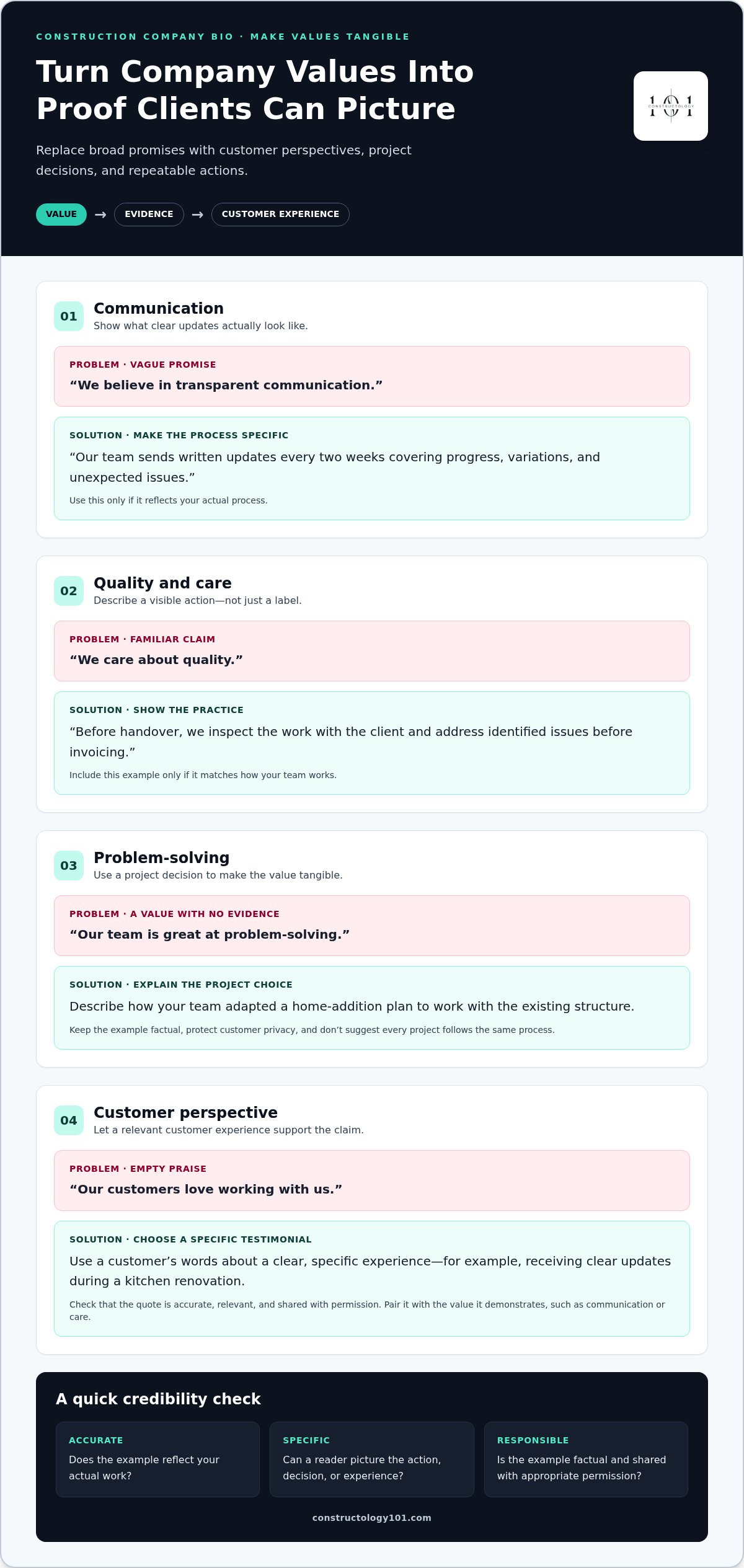
Turn each value into evidence: a customer’s words, a project decision, or a repeatable action your team takes.
-
Connect Values to Customer Testimonials
Choose a customer testimonial that describes a specific experience, such as clear updates during a kitchen renovation. A testimonial adds the customer’s perspective to your claims. Make sure the quote is accurate, relevant, and shared with permission. Avoid vague praise that could describe any contractor. Pair a short quote with the value it demonstrates, such as communication or care.
-
Use Project Examples to Illustrate Values
Choose a project example that shows how a value shaped the work. A home addition, for instance, could demonstrate problem-solving if your team adapted the plan to an existing structure. This makes your values tangible by showing decisions and outcomes instead of relying on labels. Keep the description factual, protect customer privacy, and don’t imply that every project follows the same process.
- Describe the action behind each value. Replace “we care about quality” with a concrete practice, such as inspecting the work with the client before handover and addressing identified issues before invoicing. Include this example only if it reflects your actual process, and use language customers can picture.
- Show how communication works. If your team sends written updates every two weeks, explain what they cover: progress, variations, and unexpected issues. This turns “transparent communication” into a clear expectation. Choose a process that represents your work and explain how it helps clients stay informed throughout a project.
- Match each claim with evidence. Review your bio sentence by sentence. Link “reliable scheduling” to a real planning practice, or connect “respect for the home” to a specific site routine. Remove claims that lack supporting examples. A focused set of evidence-backed statements shows how your principles guide everyday construction work.
Communicating company values and competitive advantages
Make your strongest advantages easy to understand, verify, and connect to customer needs. Use the steps below to present your experience, credentials, and local relevance clearly.
-
Present Experience, Credentials, and Licensing
Lead with the experience most relevant to the work you want to be known for. For example, describe completed residential renovations if they reflect your current focus. Include credentials, training, or licensing details only when they’re accurate and relevant. Check names and status before publishing, and don’t imply a credential covers work beyond its actual scope. To showcase qualifications, choose relevant proof and describe it precisely.
-
Build Trust with Local Customers
Name the places you genuinely serve, then connect your local knowledge to a customer benefit. For example, explain that your team works in nearby communities and understands the needs of older homes, if that reflects your experience. Mention local projects only with permission and accurate details. This helps readers assess whether your work fits their area without suggesting you serve places you don’t.
- State one clear advantage. Choose a strength customers can compare, such as a defined renovation specialty or a practical communication approach. Explain why it matters: “Our team specializes in kitchen renovations, helping homeowners focus planning on layout, storage, and finishes.” Keep the claim specific and supportable. Broad promises are less memorable.
- Connect evidence to the reader’s decision. Pair a relevant project example, credential, or customer comment with the benefit it demonstrates. A nearby homeowner may care about familiarity with local building styles; a commercial client may prioritize experience with similar facilities. Keep each example accurate and focused. To make your professional profile easier for construction peers to find, create an Interactive Directory Listing.
Constructology 101: Interactive Directory Listing
Constructology 101 offers an Interactive Directory Listing where construction professionals can present their business to an industry-focused audience. Once your bio clearly explains your values, expertise, and advantages, a directory listing gives that information another place to be discovered.
Use your listing to make your profile informative and consistent with your website bio. Clear details about your work and professional focus can help other construction industry members understand what you bring to the community. It’s a practical next step when you’re ready to build visibility and connections beyond your own website.
Constructology 101 also offers Pioneer membership at a lifetime price. Explore the Interactive Directory Listing and consider whether it fits your professional goals. Visit constructology101.com to learn more.
Put Your Company’s Next Chapter Into Words
Your company bio can grow alongside your business. Treat each update as a chance to clarify the work you want to pursue, the clients you serve best, and the standards you want customers to remember. Before publishing, ask whether every sentence reflects the company you’re building, not just the one you started.
Writing a compelling construction company bio is more than a writing task: it gives you a clear way to introduce your business as your focus and capabilities develop. Keep each revision practical. Choose a detail that needs to change, make the wording clear, and ensure your profile reflects how you work today.
If you’re ready to strengthen your presence among construction professionals, connect with Constructology 101. Take the next step with a profile that represents your business with clarity and confidence.
Frequently Asked Questions
How do I write a renovation company description if I'm just starting out?
Lead with the renovation work you plan to take on, the customers you serve, and the experience you already bring. Relevant experience might come from a previous construction role, trade training, or work on your own property. For example, describe a focus on bathroom updates and the planning or finish work you handle. Clearly identify these as experience, not completed client projects.
Should I list every service I offer in the description?
No. Choose the services most relevant to the customers you want to reach, rather than crowding the bio with every possible task. A focused description can list 3-5 main services, such as kitchen remodeling, bathroom renovations, and additions. Group related work under clear labels, then use a fuller website profile to explain additional capabilities. This keeps the opening useful to readers scanning for a specific fit.
Why does copywriting matter for a construction company?
Good copywriting translates construction services into benefits customers can understand and compare. “Concrete foundation work” names a service; adding that your team works on residential foundations clarifies the project type. Clear wording also distinguishes a specialty from a general claim. Use accurate terms that match customer needs, then point readers to a useful next step, such as reviewing project details.
What should a construction company bio include?
Include your business name, the construction work you handle, the customers or projects you serve, and a reason to consider your approach. Add a founder or director profile when their background helps explain the company’s expertise. For example, briefly state the owner’s role and contribution to daily work. Keep supporting details relevant to the reader’s decision.
How do you write a compelling construction company bio?
Start by deciding what prospective customers need to know before choosing your company. Draft a direct opening, add a specific strength, and support your claims with accurate evidence. For example, connect a renovation specialty to the spaces or project needs you handle. Then read the draft from a customer’s perspective and remove claims that don’t clarify your work, build trust, or distinguish your approach.
How can a construction company bio highlight specialties and services?
Name your specialty early, then connect it to a clear project type or customer need. Instead of saying “we handle renovations,” specify “we remodel kitchens for homeowners updating their layouts.” Follow with related services, such as cabinetry installation or finish updates, only if they match your work. This structure helps readers quickly see whether your expertise fits their project.


