

Your traditional Rolodex is officially obsolete. In the high-speed 2026 market, networking for architects and engineers has shifted from collecting names to building active, project-centric ecosystems. You don't need more contacts; you need better collaborators. Success now depends on your ability to connect with specialized talent at the exact moment a project demands it. Build partnerships. Find peers. Grow faster.
It's exhausting to deal with constant LinkedIn spam or spend days at physical events just to find one reliable niche engineer. You've likely felt the frustration of searching for partners who actually understand 5D BIM integrations or the latest carbon disclosure regulations. We agree that your time is too valuable for generic platforms that don't speak the language of design and construction.
This guide promises a better way forward. You'll learn to build high-value partnerships, find specialized project peers, and leverage digital tools to grow your AEC career. We'll preview how to secure high-value referrals, establish cross-disciplinary alliances, and streamline your digital visibility. Stop chasing leads and start engineering a network that works as hard as you do.
Key Takeaways
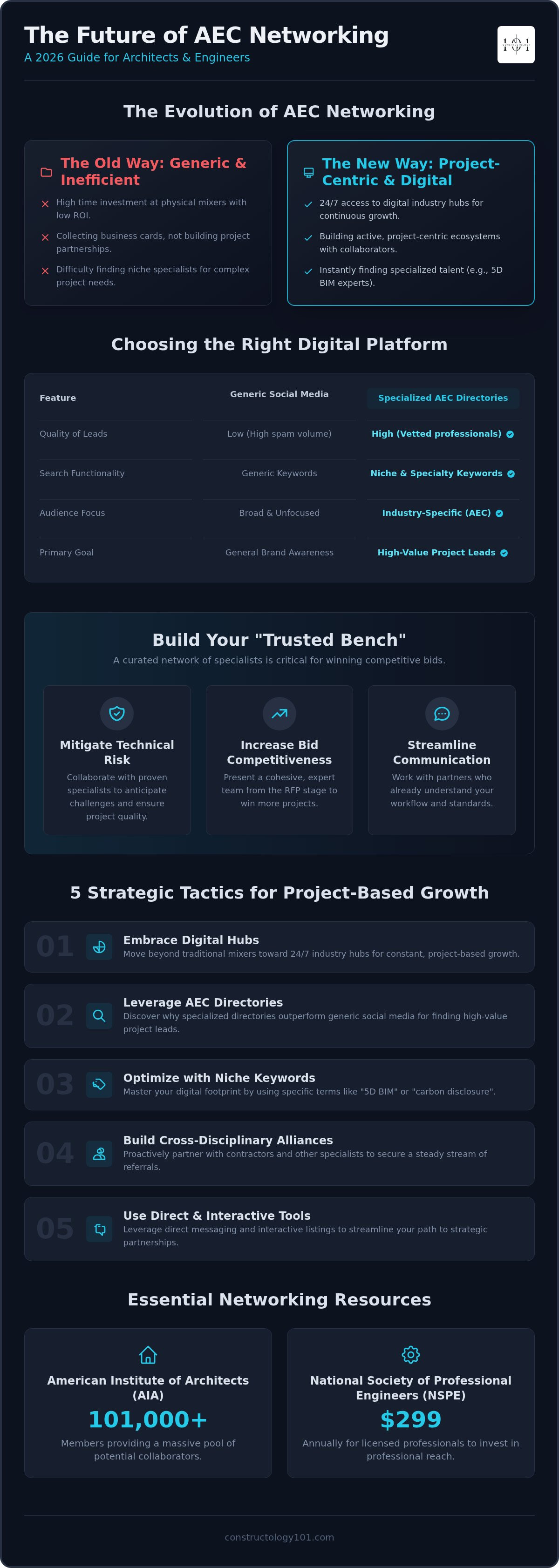
- Move beyond traditional physical mixers toward 24/7 digital industry hubs for constant project-based growth.
- Discover why specialized AEC directories outperform generic social media for finding high-value project leads.
- Master effective networking for architects and engineers by optimizing your digital footprint with niche, specialty keywords.
- Learn to build proactive, cross-disciplinary alliances with contractors to secure a steady stream of referrals.
- Leverage direct messaging and interactive listings to streamline your path to strategic industry partnerships.
Why AEC Professional Networking is Changing in 2026
The AEC landscape has moved past the era of casual handshakes and static resumes. In 2026, networking for architects and engineers is about building a dynamic ecosystem that functions 24/7. You don't just need a list of names; you need a strategic pipeline of partners who can solve specific project bottlenecks. While the core principles of Business networking remain relevant, the execution has become significantly more technical and project-focused. Success now depends on your ability to find specialized talent that matches your project's BIM requirements and sustainability goals.
The industry moves fast. You must move faster. Professional growth in this sector no longer comes from a job board; it comes from cross-disciplinary alliances that form long before a project hits the bidding stage. Architects who connect early with specialized structural or MEP engineers can anticipate challenges, refine designs, and present a more cohesive front to clients. This proactive approach turns networking from a chore into a high-value growth engine.
The Decline of Traditional AEC Mixers
Physical mixers are losing their grip on the industry. These events often demand a high time investment for a very low return on specialized connections. You spend hours traveling, pay expensive registration fees, and often leave with a pocket full of cards from people who don't fit your current project needs. The math simply doesn't add up for busy professionals. Generic events lack the depth required to find experts in niche fields like modular construction or advanced carbon disclosure. Digital industry hubs have replaced these mixers by offering instant access to verified peers. You can now filter for expertise, check project histories, and initiate conversations in seconds. Save time. Reduce costs. Connect better.
The Value of Project-Centric Connections
Modern networking for architects and engineers focuses on the "trusted bench." This is a curated group of consultants you can call upon the moment a complex commercial project arises. Finding these partners before the RFP phase begins is critical for winning competitive bids. When you have an established network of engineers you trust, you reduce project risk and eliminate the friction of vetting new partners under tight deadlines. This strategy allows you to:
- Mitigate technical risk by working with proven specialists.
- Increase bid competitiveness through early-stage collaboration.
- Streamline communication with partners who understand your workflow.
Building these connections ensures you aren't just reacting to the market. You are shaping it by surrounding yourself with the best talent available. Start building your bench today to secure your projects for tomorrow.
Essential Networking Resources for Architects and Engineers
Accessing the right resources is the foundation of effective networking for architects and engineers. You shouldn't just join every group; you should target organizations that offer high-level project access. For instance, the American Institute of Architects (AIA) provides a network of over 101,000 members, offering a massive pool of potential collaborators. Similarly, the National Society of Professional Engineers (NSPE) offers licensed professionals a platform for $299 annually. These aren't just membership fees. They are investments in your professional reach. Combine these traditional associations with modern industry-specific digital directories to ensure your profile is visible where project owners actually look.
Mentorship and Peer Review Groups
Mentorship in 2026 has evolved into a 360-degree exchange. It's no longer just a senior professional guiding a junior. It's about cross-disciplinary peer review that builds trust across different firms. Look for mentors outside your immediate company to gain an unbiased perspective on the market. Engaging in peer review groups allows you to showcase your technical expertise to other disciplines, turning a simple review into a long-term partnership. For those just starting out, checking out 5 Networking Tips for Aspiring Architects can provide a solid roadmap for these early connections. This approach builds a reputation for quality and reliability before you ever sign a contract.
Industry Committees and Boards
Committee work is the fastest way to build authority. When you join a technical committee or a local planning board, you move from a passive observer to an active industry shaper. Choose committees that align with your specific project goals, such as sustainability or modular construction. This visibility positions you as a thought leader before you even enter a pitch meeting. Board positions offer high-level networking opportunities with developers and city officials, providing insights into upcoming infrastructure projects. Active participation ensures you aren't just waiting for work to arrive. You're helping to define the projects of the future.
Don't overlook continuing education as a networking tool. Renewing AIA members can access an AIAU subscription for $80, providing unlimited credits through 2026. These sessions are prime environments for meeting peers who share your technical interests. To maximize these efforts, ensure your firm is listed in a modern construction professional network where these new connections can easily find and message you for future collaborations.
Digital Platforms: LinkedIn vs. Industry-Specific AEC Directories
General platforms serve the masses. Specialized directories serve the project. While LinkedIn remains a powerful tool for job seekers, networking for architects and engineers in 2026 requires a more surgical approach. General social media is currently overwhelmed by algorithmic noise, self-promotion, and non-industry content. You don't need a feed full of generic business advice; you need a searchable database of technical experts. Success depends on moving from a passive social presence to an active, project-centric digital strategy. Save time. Reduce noise. Build value.
The Noise Problem on General Platforms
LinkedIn has become cluttered. It’s a space where industry insights often get buried under recruitment spam and irrelevant personal updates. For a busy architect or engineer, this creates a massive time-drain. Finding a partner with specific experience in modular construction or 5D BIM is difficult when you can't easily filter for trade certifications or past project performance. Specialized platforms solve this by removing the clutter. They provide a clean, high-impact environment where every connection has professional value. General contractors and project managers save time by using these focused hubs to source reliable partners quickly. Don't waste hours scrolling; start connecting with intent.
Interactive Directories: The AEC Digital Hub
An Interactive Directory Listing is the modern evolution of the professional profile. It’s not just a digital resume; it’s a project-centric portfolio that works while you sleep. These directories allow you to showcase completed work, list specialized skills, and prove your expertise through real-world data. This level of transparency builds instant credibility. When a potential partner views your profile, they see your capabilities immediately. They don't have to guess if you're the right fit for their next commercial project. Showcase work. Prove expertise. Build credibility.
Direct communication is the ultimate advantage. Specialized directories often feature integrated messaging that allows you to bypass corporate gatekeepers and reach decision-makers directly. This peer-to-peer connection is vital for fast-moving AEC projects. It allows you to discuss technical specs, check availability, and form partnerships without the friction of general social media. Switch your focus from being "liked" to being hired. Build a profile that reflects your technical worth and makes you the obvious choice for high-value project referrals. Be found by the right people at the right time.
5 Strategic Networking Tactics for Project-Based Growth
Networking for architects and engineers in 2026 is a deliberate, technical process. It's not about being social; it's about being strategic. To scale your firm, you must position yourself as a high-value asset before a project even exists. Success depends on your ability to demonstrate technical competence and reliability through every digital touchpoint. Scale your firm. Secure better bids. Build lasting value.
- Optimize for specialty keywords: Don't just list your title. Use specific terms like "carbon disclosure," "modular design," or "5D BIM integration" in your profile. This ensures you appear in searches when firms need specific expertise.
- Engage in proactive architect and contractor networking: Build relationships with builders who can refer your services to clients early in the planning phase.
- Share project insights: Move beyond project photos. Post brief case studies that explain how you solved a specific structural challenge or reduced material waste.
- Systematize your follow-up: Use a simple CRM or calendar tool to reach out to new contacts every 90 days. Consistency turns a casual meeting into a professional alliance.
- Target niche communities: Focus on finding minority-owned or specialized trade partners. This is essential for meeting diversity requirements on large public infrastructure projects currently entering their peak delivery phase.
Building Strategic Project Partnerships
Identify complementary firms that share your project values but offer different services. For example, a landscape architect and a structural engineer can form a powerful joint venture for urban redevelopment bids. Use the "pre-project coffee" to set clear expectations on communication and workflow before a contract is signed. You can effectively use online construction networking to vet these potential partners by reviewing their project history and direct peer feedback. This reduces the friction of collaboration and ensures your team is ready to perform from day one.
Showcasing Expertise Through Content
Content is your most persistent tool for effective networking for architects and engineers. Write case studies that highlight your problem-solving skills rather than just the finished aesthetic. Participate in industry forums where you can answer technical questions about new regulations, such as recent laws capping retention for private construction contracts at 5%. By providing clear, actionable solutions, you build a reputation as a "solution provider" rather than just another service vendor. This authority makes you the first person peers think of when a complex project arises. Prove your worth. Share your knowledge. Lead the conversation.
Ready to put these tactics into action? Secure your spot in the industry's most active community by creating your Interactive Directory Listing today.
Leveraging Constructology 101 for AEC Partnerships
You have mastered the strategic tactics. Now you need the infrastructure to execute them. Constructology 101 provides the digital hub where networking for architects and engineers becomes a streamlined, daily reality. Join a dedicated construction professional network designed specifically for the design and build community. This isn't a social feed; it's a project-delivery engine that connects you with the right partners at the right time. Build partnerships. Find peers. Grow faster.
Direct communication is the lifeblood of successful projects. Effective networking for architects and engineers is no longer about who you know, but how easily you can find the right expertise. Use integrated messaging to bypass gatekeepers and speak directly with the engineers or architects you need. No more waiting for email replies or navigating corporate phone trees. Find peers. Initiate contact. Start building.
The Pioneer Membership Advantage
Securing a lifetime deal in a rapidly growing industry network is a strategic move for any firm owner. The Pioneer Membership offers more than just a listing; it provides a permanent seat at the table. By joining early, you secure a lifetime price that protects your marketing budget from future inflation. This early-adopter status boosts your firm’s visibility, making you one of the first names project managers see when they search for specialized partners. You contribute to the growth of a pro-contractor platform that prioritizes direct peer-to-peer communication over algorithmic distractions. Lock in your rate. Increase your reach. Secure your legacy.
Finding the Right Partners Nationwide
Building a national network no longer requires expensive flights or time-consuming conferences. The directory allows you to find niche engineering experts and specialty trades with a few clicks. If your project requires a specific skill set, such as advanced modular construction or seismic engineering, you can filter the database to find the perfect match. This national reach is particularly valuable for professionals looking to participate in the surge of public infrastructure projects hitting their peak delivery phase in 2026. You can vet partners, review their interactive profiles, and start a conversation immediately. Expand your territory. Minimize your overhead. Connect with confidence.
Don't let your firm get left behind in the shift to digital-first collaboration. Secure your presence where the industry's most proactive professionals are already building their next ventures. Claim your spot. Showcase your work. Lead the network.
Secure Your AEC Growth Strategy
The 2026 marketplace demands a proactive approach to professional connections. You have learned how to move beyond the noise of general social media and focus on high-value, project-centric partnerships. Success now depends on your ability to be found by the right collaborators at the exact moment a project requires your specific expertise. Mastering networking for architects and engineers is no longer a luxury; it is the foundation of a resilient, scalable firm.
Take the next step by positioning your firm in a hub designed specifically for the design and build community. Benefit from a specialized AEC directory focus, leverage interactive peer-to-peer messaging, and secure your presence among the industry's elite. Early adopters gain a significant advantage in visibility and reach. Don't wait for the next RFP to start building your network. Start today. Build faster. Grow stronger.
Join the Constructology 101 Pioneer Program Today and lock in your lifetime access to the modern industry network. Your next high-value partnership is just one direct message away.
Frequently Asked Questions
How do architects network with engineers for new projects?
Architects network by leveraging project-centric hubs to find engineers who match specific BIM or sustainability requirements. Rather than waiting for a project to start, they build a "trusted bench" through early-stage digital vetting. This proactive approach ensures that when a complex project arises, they already have reliable partners ready to bid. Strategic networking for architects and engineers turns casual contact into technical alliances that reduce overall project risk.
What is the best professional network for AEC professionals in 2026?
In 2026, the best network is a specialized hub like Constructology 101 that prioritizes direct, peer-to-peer industry connections. General social media is often too cluttered with non-industry content, making it difficult to find verified trade experts. A dedicated AEC platform allows for precise filtering by technical skill and project history. This ensures you spend your time connecting with high-value peers who are ready to collaborate on complex design and construction builds.
Is LinkedIn effective for architectural business development?
LinkedIn is still a valid tool for general visibility, but it's often inefficient for specific architectural business development. The platform's algorithm favors broad engagement over technical precision, leading to significant noise and recruitment spam. To win high-value contracts, you need more than a resume; you need a project-focused profile. Transitioning your focus to a specialized directory ensures your expertise is visible to those specifically searching for architectural and engineering talent.
How can engineers find more architectural project partners?
Engineers find partners by showcasing technical problem-solving skills rather than just listing project names. Use interactive profiles to explain how your design choices reduced costs or improved structural integrity. By engaging in direct messaging through an industry-specific network, you can reach architects during the planning phase. This allows you to offer value early, positioning your firm as a vital consultant rather than just another vendor in the bidding pool.
What are the benefits of an interactive directory for AEC pros?
An interactive directory provides 24/7 professional visibility and removes the gatekeepers common in traditional AEC firms. It allows you to manage your own narrative by showcasing completed work and specialized certifications directly to peers. The primary benefit is the ability to find and be found by specialty trades nationwide without travel costs. Integrated messaging tools facilitate fast, direct communication, which is essential for meeting tight project deadlines in a fast-paced market.
How do I network if I am an introvert in the construction industry?
Digital networking is a powerful tool for introverts because it shifts the focus from social small talk to technical expertise. You can build a robust network by sharing case studies, participating in forum discussions, and optimizing your professional profile. This content-first strategy allows your work to speak for you. It builds authority and trust with peers at your own pace, creating a steady stream of project referrals without the exhaustion of physical mixers.
What should be included in an AEC networking profile?
Your profile must include niche keywords, technical certifications, and problem-solving case studies. Focus on specific trends like carbon-neutral mandates or new industry regulations such as the 5% retention caps on private contracts. High-quality project data and clear descriptions of your BIM capabilities are also essential. A well-optimized profile ensures that networking for architects and engineers happens automatically, as your expertise matches the specific search queries of project managers.
How does a Pioneer Membership help my engineering firm?
A Pioneer Membership grants your firm a permanent, high-visibility listing and a lifetime price for all networking tools. This early-adopter status ensures you are among the first experts seen by users searching the directory. It provides unlimited access to project sharing and integrated messaging without the burden of recurring monthly fees. This membership is a strategic investment that secures your firm's digital reach as the platform grows into the industry's primary professional hub.


